
Grok Bot Is OpenClaw Without the Rough Edges

Good morning AI entrepreneurs & enthusiasts,
SpaceXAI and Cursor shipped Grok Bot, where every agent gets its own computer, signs into your accounts, and works multi-step jobs until it needs a decision from you. This morning Lovable raised $400M at $13.3B, double its valuation from eight months ago, built on people who never learned to code and now run entire businesses on software they described out loud.
One company proved the work can be handed off. The other proved who is doing the handing. Software is no longer something you commission or learn to write. It is something you describe, then supervise.
In today’s AI news:
Grok Bot turns AI agents into delegated coworkers
Lovable doubles to $13.3B in eight months
Brad Lightcap leaves OpenAI to start a new venture
Today’s Top Tools + Quick News
👋 Grok Bot turns AI agents into delegated coworkers
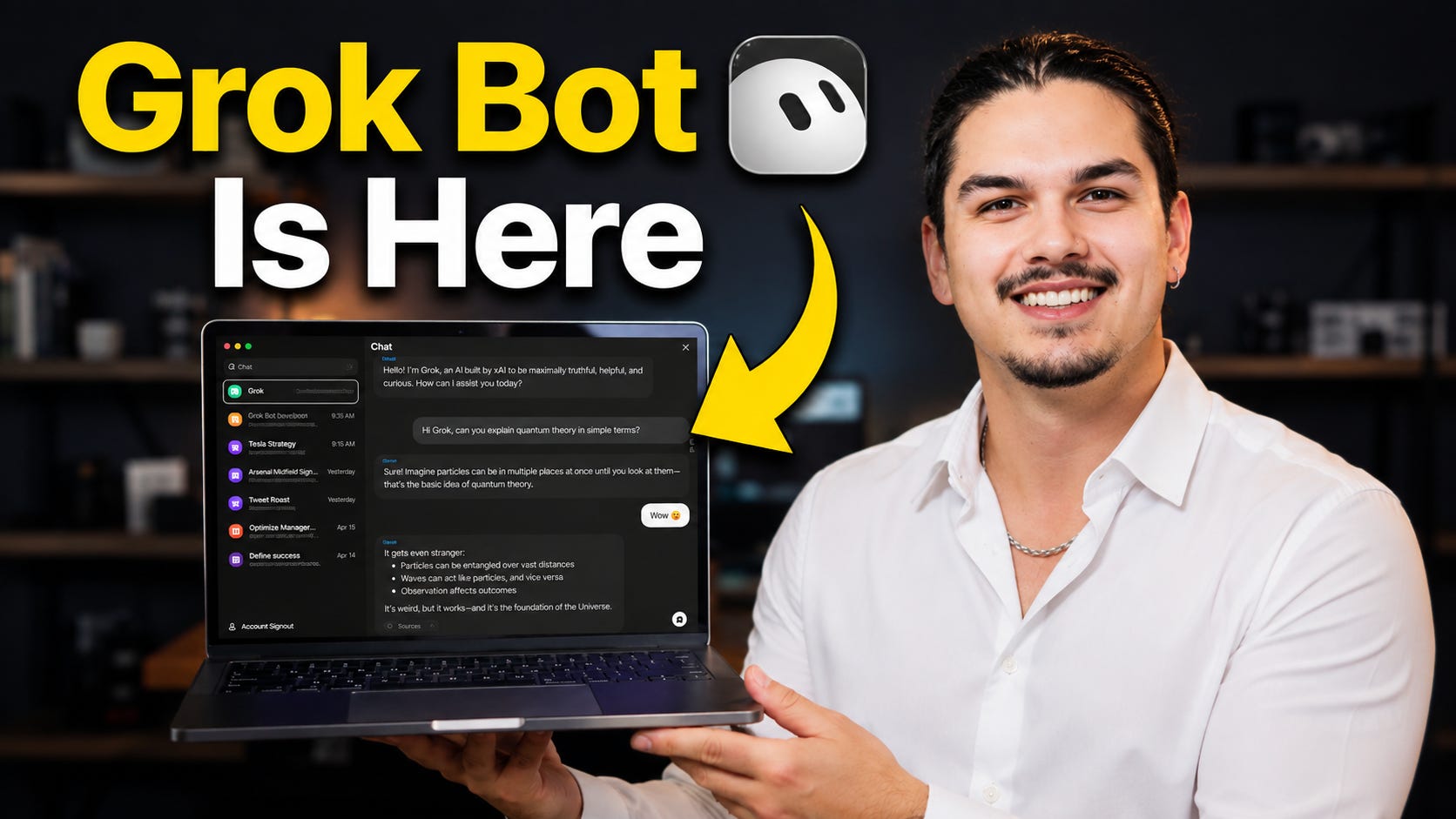
Always-on bots that get their own computer, sign into your tools, and finish the job.
News: SpaceXAI and Cursor rolled out Grok Bot in early beta, an iMessage-style app where every Bot gets its own cloud computer, signs into the services you authorize, and works multi-step jobs until it needs your approval. The line being crossed is copilot to delegated worker. You are not prompting a model anymore, you are supervising staff.
Details:
Each Bot runs its own virtual machine and drives software through existing interfaces rather than an API or MCP connection, reaching the long tail of tools never built for autonomous software.
The App Store listing ships named job templates: Sales Outbound queues CRM updates for approval, Talent Scout skips anyone already in your ATS, Inbox Manager drafts but never sends without you, Expense Manager pulls and codes receipts.
Show a Bot a workflow once and it saves the process as a reusable routine, keeps your corrections, and follows up on its own when a task stalls. Bots also run in parallel, hand assignments to each other, and route progress through a coordinator.
The org chart explains the product: SpaceX agreed to acquire Cursor parent Anysphere for $60B in June, the largest venture-backed startup acquisition ever, with the merger expected to close this quarter.
Musk says the beta widens once basic issues in the early build are fixed, with Grok 4.6 arriving later this week, which matches what he previewed on the August 10 investor call.
Access is bundled into SuperGrok Heavy, Cursor Ultra, and Cursor Teams Premium at $120 per seat per month for teams. Note the developer on the iOS listing: Anysphere, the company behind Cursor, not xAI.
Why it matters: Grok Bot appears to be a more consistent, more finished version of what OpenClaw pioneered. I will say the obvious thing too: given Grok’s track record on privacy and content moderation, handing it full access to your inbox, CRM, and calendar is a real risk, not a theoretical one. My best practice, and what I would tell any operator on my team this week, is to never connect your primary account. Create a dedicated agent account with scoped permissions, give it only what the job requires, and keep approval in front of anything outbound or irreversible. With that guardrail in place this is a strong release, and the reaction has been near-universally positive. I am trying it later today. Shout out to the teams at xAI and Cursor.
💰 Lovable doubles to $13.3B in eight months
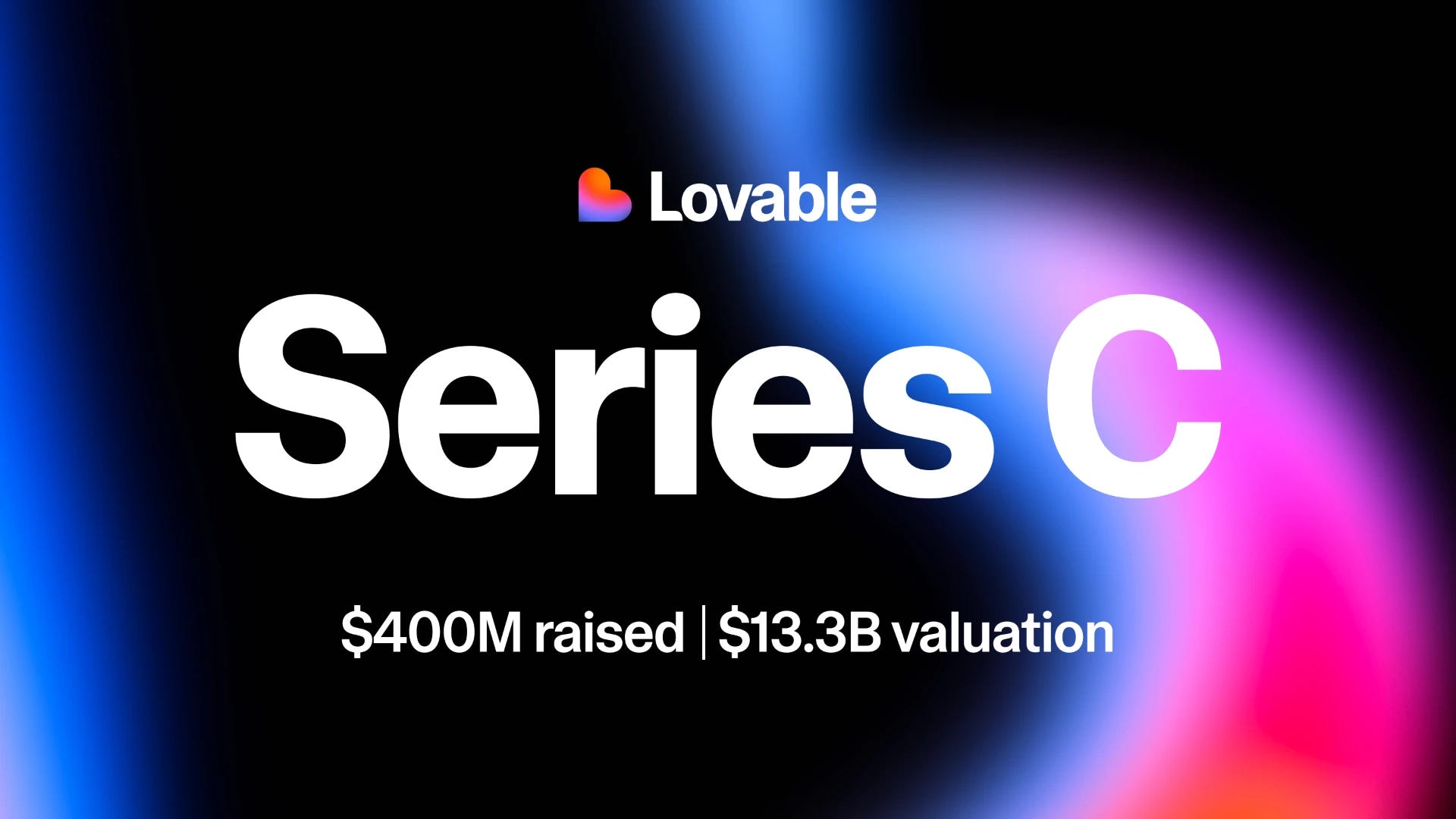
A $400M Series C led by Menlo and the EU’s Scaleup Europe Fund, with a $600M run rate in sight.
News: Stockholm-based Lovable closed a $400M Series C at a $13.3B valuation, led by Menlo Ventures and co-led by the Scaleup Europe Fund managed by EQT. That is more than double the $6.6B it was worth in December. The company launched publicly in November 2024, which makes this one of the fastest climbs from launch to teen-billions in software history.
Details:
The valuation curve: $1.8B in mid-2025, $6.6B in December 2025, $13.3B today, with $100M ARR reached inside eight months of launch.
Revenue is tracking toward a $600M run rate by the end of August, roughly triple the level disclosed in December, after crossing $500M in June.
New money came from Balderton and Carmignac in Europe, Kaszek and LTS Growth in Latin America, Tencent and World Innovation Lab in Asia, with Accel, CapitalG, DST Global, HubSpot Ventures, and Salesforce Ventures returning.
Nearly two-thirds of the Fortune 500 now have employees using it, up from half six months ago, with Nvidia, Adidas, Zendesk, Workday, and Asana named among customers.
The roadmap runs past prompting: automated operations, payments, and proactive multi-agent orchestration, with headcount going to 450 and offices opening in London, Boston, San Francisco, and New York.
Why it matters: Adding $6.7B of valuation in eight months is a pace almost nobody in software has matched, and Lovable earned it. Here is where I part ways with most of the commentary: those of us inside the bubble talk about vibe coding like it already happened, and the truth is the overwhelming majority of the world has never built anything this way. This is the beginning, not the peak, and Lovable is the best on-ramp for the people who have not crossed over yet. Watch the roadmap rather than the valuation, because payments and multi-agent orchestration turn an app builder into the operating system for a company. And a note on how they got here: their community work is genuinely excellent, they create real experiences for founders and they actually listen to product feedback, which is the compounding advantage nobody puts in a deck. Huge fan of that team.
🚪 Brad Lightcap leaves OpenAI to start a new venture
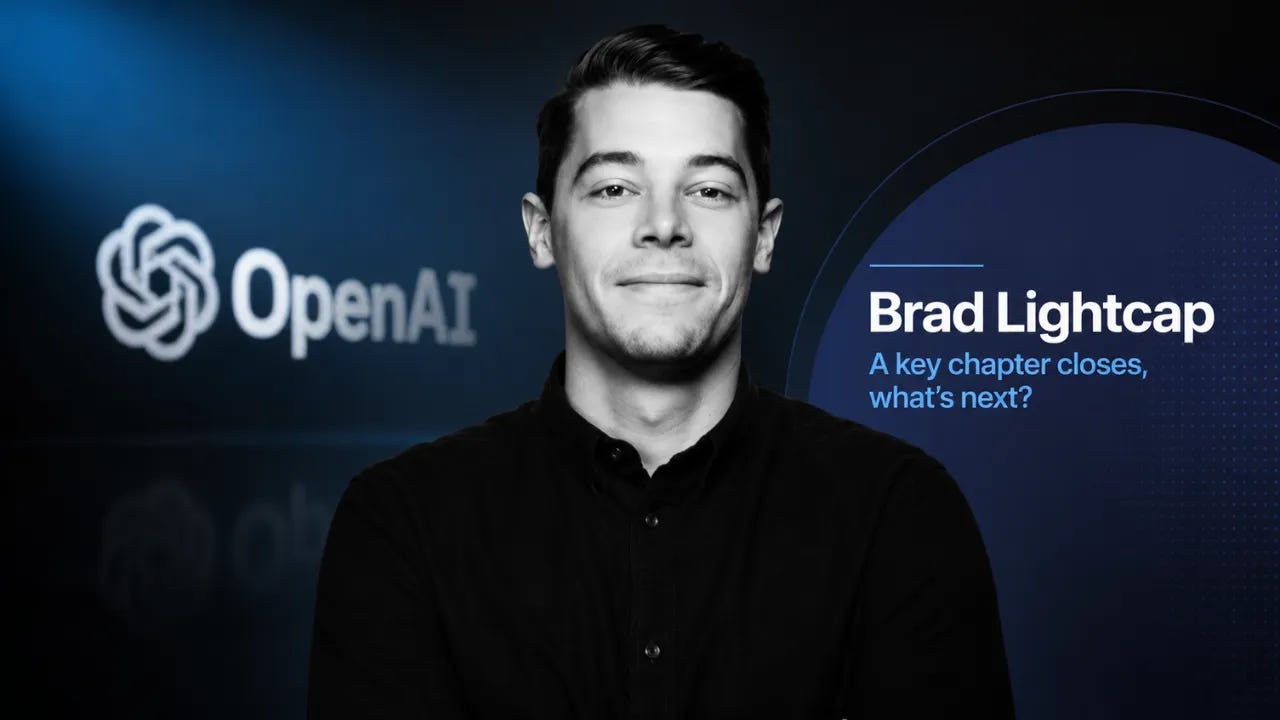
OpenAI’s longest-serving operator exits eight years in, with the S-1 already filed.
News: Brad Lightcap, OpenAI’s COO for four years and one of its earliest operators, told staff Tuesday he is leaving to start something new. He stays a few weeks and says he is not going far. He is the fourth senior departure in as many weeks, at a company with a confidential S-1 on file.
Details:
He joined in 2018 after working with Sam Altman at Y Combinator, spent four years as CFO, then ran operations as COO until April 2026, when he moved to special projects and CRO Denise Dresser absorbed his day-to-day scope.
He built the commercial engine from nothing: go-to-market grew from roughly 50 people to more than 700 across sales, customer success, developer relations, and partnerships.
His note says he has spent recent months focused on “the next horizon” and on a few new things the world needs to get right.
Fidji Simo stepped down in July and has since joined an AI health startup, Barret Zoph returned and left five months later, and Bill Peebles exited with Sora.
OpenAI filed confidentially on June 8 off an $852B post-money valuation, targeting as soon as Q4 2026, though reporting now points to a listing slipping into 2027.
Why it matters: Here is what I keep turning over: why leave before the IPO? Brad spent eight years there, built the revenue engine from nothing, and is walking away with the listing now looking like a 2027 event. Someone who was there from the beginning and did the job this well would normally want to see it through the bell. That he is not tells you the thing he is going to build matters more to him than the outcome he already earned, and I have zero doubt it will be wildly successful, because it is Brad Lightcap. The broader read is that the labs are entering their diaspora phase, where operating talent that scaled the first wave leaves to build the second.
🛠️ Today’s Top Tools
🤖 Grok Bot - always-on agent teammates with their own cloud computers, now in beta on Mac, iPhone, Windows, and Linux
💜 Lovable - describe an app in plain language and ship it, now backed by a $400M round
🎬 LTX-2.5 - open-weights world model for video and physical AI, free for companies under $10M ARR
💻 ChatGPT Desktop - ChatGPT, Work, and Codex in one app, now shipping on Linux
📰 Quick News
LTX shipped LTX-2.5, and the licensing is the story for this list: free commercial use for organizations under $10M ARR, open weights on Hugging Face, day-one ComfyUI integration, and a 10-second 720p clip rendered in 6.8 seconds on two GB200s. Most of you qualify for the free tier.
OpenAI shipped the ChatGPT desktop app for Linux in preview, bundling ChatGPT, ChatGPT Work, and Codex in one install across Ubuntu, Debian, and Fedora. One gap worth knowing before you switch: native computer use outside the in-app browser is not available at launch, which also rules out Record and Replay.